
Amaze GO!
Oakever GamesPuzzle
4.99.61K Reviews
- Version
- 1.38.0
- Installs
- 100.00M
- Age Rating
- Everyone
Screenshots
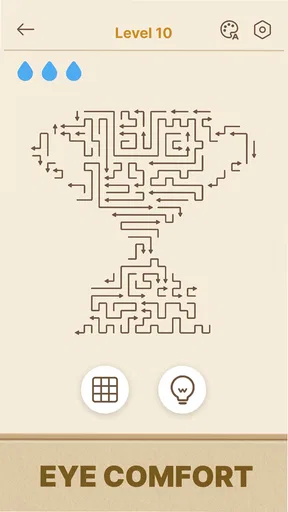
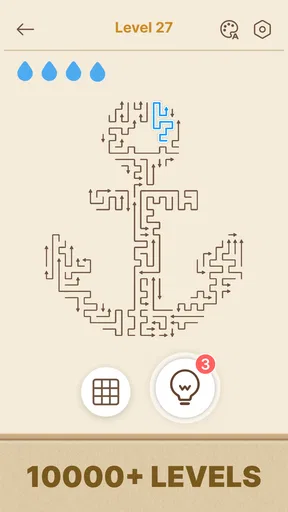
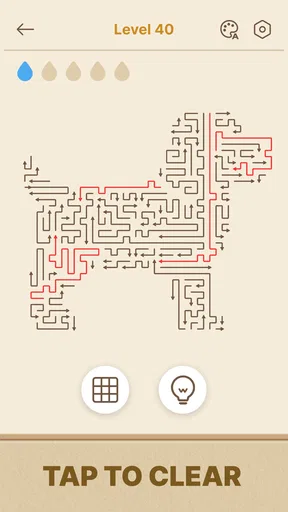
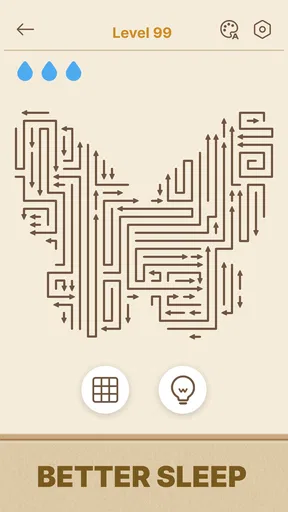
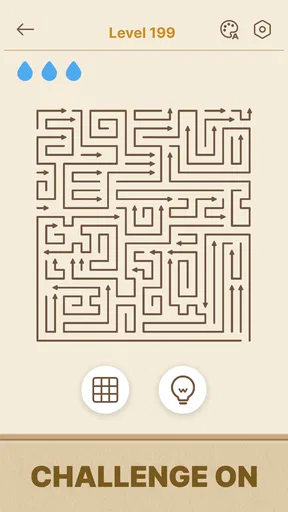
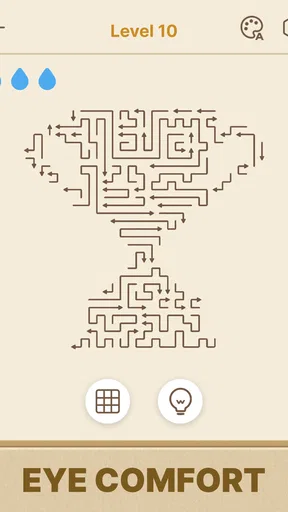
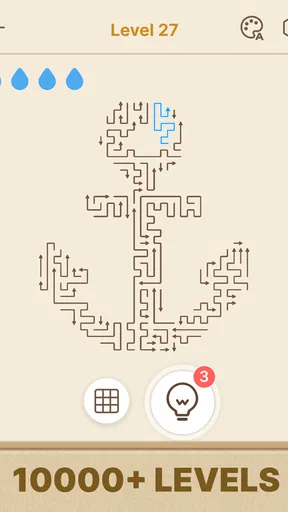
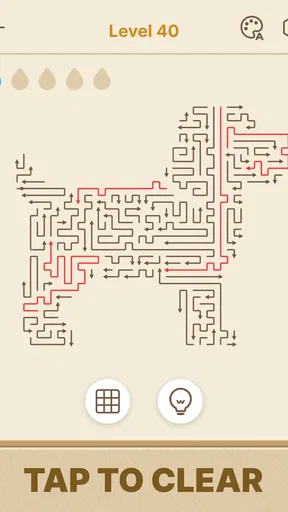
Our Review of Amaze GO!
 Analysis by Appyee
I spent time with Amaze GO! as a quick puzzle game rather than treating it like something to play in long sessions. Its basic idea is easy to understand: clear a board by tapping, then work out the right sequence when the layout becomes less obvious. That simplicity is its strongest quality. I can open it during a short break, understand the objective immediately, and start solving without learning a complicated ruleset first.
It is a free puzzle game from Oakever Games, rated for Everyone, and it runs on Android devices using version 7.0 or later. The game reached a 4.6 average from around 212 thousand ratings, while its install count has passed 50 million. Those figures suggest that the format has found a broad audience, but they do not change my main impression: this is best approached as a light, repeatable brain exercise rather than a deep strategy game.
How the basic clearing loop feels in everyday play
The normal workflow is pleasantly direct. I look at the board, identify the pieces or areas that can be removed, and tap to clear them. The first few moves usually feel intuitive, but the interesting part comes when a careless tap leaves an awkward shape behind. At that point, the game stops being simple reflex play and becomes a small planning exercise.
That distinction matters. I do not need fast fingers to enjoy it, and I am not competing against a demanding action sequence. The useful skill is learning to pause before tapping. When I treat every move as part of a chain instead of clearing the most obvious item immediately, the board becomes easier to read. This is the habit I would recommend to a new player: scan the whole layout first, then choose the move that preserves the most options.
A realistic use case is a short wait at a bus stop or a few quiet minutes after lunch. I can play one small stretch without committing to a long story, a multiplayer match, or a complicated campaign. The game is also suitable for someone who wants a gentle mental diversion while avoiding the pressure found in timed puzzle alternatives. Its age rating makes it approachable for a wide audience, although younger players may still benefit from learning that random tapping can make a board harder to solve.
The free entry point is another practical advantage. I can try the central puzzle loop without paying first, which makes the decision easy for casual players. At the same time, anyone looking for a large narrative, character collection, or elaborate progression system may find the experience too narrow. The appeal comes from repeating the act of observing, deciding, and clearing—not from a large amount of surrounding content.
My first habit: read before touching
The most useful change I made was to stop treating the first available move as the best move. In a board-clearing puzzle, a move can be legal and still be strategically poor. I now check which areas will remain connected, which isolated pieces may become inconvenient, and whether removing one section will make the next group easier to recognize.
This is a small adjustment, but it gives the game more depth than its short summary suggests. It also makes failures more informative. When a board goes wrong, I can usually identify the moment when I acted too quickly. That creates a satisfying learning loop without requiring a tutorial full of technical explanations.
For a relaxed session, I would not overthink every tap. The game works best when I use a quick visual scan followed by one deliberate decision. Excessive hesitation can make a simple puzzle feel like work, especially when I am playing only to relax. The balance is to plan the next few consequences, not to search for a perfect theory before every move.
Settings and device habits worth checking
Because the core interaction is based on tapping, the most important practical check is whether the board is comfortable to see and touch on your phone or tablet. I prefer playing with the device held steadily and the screen free of distractions. A crowded notification session or an unreliable touch can turn an otherwise clear puzzle into a frustrating one.
I also recommend checking the available in-game options before settling into a routine. Settings are worth reviewing for the way they affect sound, notifications, or general comfort, but I would not assume that changing every option will improve solving. A quiet setup is better for concentration, while sound may make the game feel more active during casual play. The right choice depends on whether I am using it as a focus exercise or as background entertainment.
One practical workflow is to keep the game in a short-session folder rather than placing it beside more demanding games. That small organizational choice helps me use it for its real strength: filling spare moments without encouraging an extended commitment. I also avoid playing while walking or doing another task, because the puzzles reward visual attention and a rushed tap can spoil an otherwise manageable board.
The current version is 1.27.0, so I would keep the app updated through the normal device store process. Updates can be useful for general compatibility and maintenance, but I would not expect an update number alone to transform the game into a different kind of puzzle experience. Its identity remains the same: compact boards, direct taps, and decisions built around clearing space.
Patterns that make solving faster without making it careless
Experienced play is less about speed than about reducing wasted moves. I look for the largest safe clearing opportunity first, but I do not automatically choose it. A smaller move may be better if it opens a clean route through the rest of the board. This is one of the main trade-offs: immediate progress feels rewarding, yet preserving flexibility often produces a better result.
Another useful pattern is to work from the edges when the center is visually crowded. Edge pieces are often easier to evaluate because they have fewer surrounding possibilities. Clearing them can reveal the shape of the remaining board. I do not apply this as a rigid rule, because some layouts make a central move the obvious key. Instead, I use the edge as a starting point when the board looks confusing.
I also group my attention by consequence. Rather than asking only, “What can I tap now?”, I ask, “What will this tap expose or remove next?” That second question turns the game into a sequence of small forecasts. It is especially helpful when several moves appear equally available. The best choice is often the one that leaves a simple, readable board instead of a scattered collection of awkward leftovers.
When I make a mistake, restarting mentally is more useful than tapping faster. I retrace the last decision and consider whether I cleared a convenient piece too early. This approach helps me improve without needing a formal scoring system or external guide. It also keeps the game relaxing, because the focus stays on recognizing patterns rather than blaming the controls.
Where it differs from familiar puzzle alternatives
Compared with match-three games, Amaze GO! feels less dependent on creating chains through colorful combinations. The attention is directed toward clearing the board and managing the consequences of each tap. Players who enjoy planning a clean sequence may prefer this style, while people who want frequent visual effects and surprise cascades may find match-three games more exciting.
It also differs from crossword or word puzzles because there is no need to retrieve vocabulary or interpret clues. The challenge is visual and positional. That makes it easier to enter when I am tired, but it can also make the experience feel less varied for someone who wants a different theme in every round.
Compared with physics-based puzzle games, the appeal is more orderly. I am not waiting for objects to bounce, balance, or react unpredictably. The board asks me to inspect a situation and make a controlled tap. That predictability is useful for short breaks, although players who enjoy experimentation and surprising outcomes may prefer a physics-focused alternative.
There is also a clear difference from competitive puzzle games. Amaze GO! is a better fit when I want to solve at my own pace rather than compare performance with another player. If your main motivation is rankings, head-to-head pressure, or constant timed urgency, this may feel too calm. Its strength is accessibility, not competitive intensity.
Limits that become clearer with longer use
The same simplicity that makes the game welcoming can eventually become its main limitation. After repeated sessions, I may want more variation in how the puzzles challenge me. If the central interaction remains familiar for too long, the experience can shift from discovery to routine. That is not a flaw for a short-break game, but it matters if you want one puzzle app to occupy your attention every day for extended periods.
There is also a difference between a puzzle being easy to start and being satisfying to master. Amaze GO! succeeds strongly at the first goal. The second depends on how much you enjoy refining visual habits and avoiding poor sequences. Players who need a dramatic difficulty curve, a story, or a large collection of distinct mechanics should look elsewhere for a more substantial long-term challenge.
I would also skip it if I know I tend to tap impulsively and dislike replaying a board after a bad decision. The game rewards patience, so someone seeking instant action may experience the planning as friction. Likewise, if I want a word-based workout, a number puzzle, or a game built around elaborate levels, this particular format will not replace those alternatives.
On the other hand, that restraint is valuable for people who want a clear purpose and minimal learning overhead. I can recommend it to a family member who wants a simple puzzle, to a commuter looking for a short distraction, or to a player who enjoys improving through observation rather than memorizing complicated systems. The Everyone rating supports that broad accessibility, but personal taste still determines whether the repetition feels calming or limited.
Who will get the most from it
I think the best audience is someone who likes compact visual puzzles and wants a free game that can be understood almost immediately. It works particularly well for players who enjoy making careful choices but do not want a timer, a story campaign, or a competitive match dominating the session.
It is also a good choice for building a small repeatable habit. I can play a few boards, notice whether I am rushing, and stop without feeling that I have abandoned a major objective. That makes it easier to use responsibly than games designed around constant collection or lengthy progression, even though the simple loop may not satisfy players seeking a large sense of advancement.
For children and mixed-age households, the straightforward interaction is an advantage. Adults can explain the basic goal quickly, then let the player develop better planning habits naturally. I would still encourage younger users to focus on thinking through a move rather than tapping randomly, because the educational value is in the decision-making, not merely in removing items from the screen.
For experienced puzzle players, the recommendation is more qualified. You may appreciate the clean board-reading challenge, especially in short sessions, but you should not expect the depth of a specialist logic game. I would keep it alongside a more demanding favorite rather than treating it as a complete replacement.
My verdict after settling into a repeatable routine
After using it as intended, I see Amaze GO! as a focused, approachable puzzle game with a useful everyday role. Its best feature is the clarity of the loop: inspect the board, choose a tap, learn from the result, and try to leave a cleaner position. The game does not need complicated presentation to make that process enjoyable.
My recommended routine is simple. Open it when I have a short window, scan before tapping, favor moves that preserve options, and stop when the board begins to feel like repetition rather than relaxation. Checking the comfort settings once, keeping the phone steady, and avoiding distracted play make the experience smoother. Those habits matter more than trying to rush.
Its broad reception—an average of 4.6 and more than 50 million installs—shows that the format is easy for many people to pick up. I would still judge it by your preferred kind of challenge. If you want a free, Everyone-rated game for quiet visual problem-solving, it is an easy recommendation. If you need rich progression, deep logic systems, or competitive pressure, a more specialized puzzle title will serve you better.
My final recommendation is to try it for its short, thoughtful clearing sessions rather than expecting a full-scale puzzle adventure. Oakever Games has kept the idea accessible, and that is exactly why it works: the game gives me something to think about without demanding that I reorganize my day around it.
Privacy and Permissions
See what permissions an app requests and how it handles your data.
- Wi-Fi connection information
- view Wi-Fi connections
- Other
- view network connections, full network access, control vibration, prevent device from sleeping, read Google service configuration
Verdict
Strengths of Amaze GO!
- Simple interface makes browsing files quick and easy.
- Built-in media previews reduce the need for extra apps.
- Supports common archive formats for convenient file management.
- Lightweight design uses little storage and system resources.
- Useful search tools help locate files without digging through folders.
Limitations of Amaze GO!
- Some advanced file operations may require extra permissions.
- The interface can feel dated compared with newer file managers.
- Large folders may take a moment to load on older devices.
- Cloud storage integration is less extensive than in rival apps.
- Occasional ads may interrupt the file-browsing experience.
Other Releases by Oakever Games
View All
Sudoku - Classic Sudoku Puzzle
Puzzle4.7

Tile Explorer - Triple Match
Puzzle4.9


Meowdoku: Brain Puzzle Games
Puzzle4.7
Similar Picks in This Category
View All
Block Blast!
HungryStudio4.8

Braindom: Brain Games Test
Lahana Game Studio4.6

AMAZE!
CrazyLabs LTD4.6
Sudoku - Classic Sudoku Puzzle
Oakever Games4.7

Art Puzzle - Puzzle Games
Easybrain4.8

Arrow Puzzle: Tap Puzzle Games
Easybrain4.8
Frequently Asked Questions
What is Amaze GO! and what can I do with it?
Amaze GO! is a mobile app designed to provide an engaging digital experience through its available content and interactive features. After installing it, users can explore the main sections, adjust relevant settings, and use the app’s tools from a smartphone or tablet. The exact experience may depend on the version, device compatibility, and any services connected to the application.
Is Amaze GO! free to download and use?
Amaze GO! may be available to download at no initial cost, but users should check the current Google Play Store or Apple App Store listing before installing it. Some features, content, subscriptions, advertising, or optional purchases may require payment. I recommend reviewing the store description, in-app purchase section, and subscription terms carefully so there are no surprises after creating an account or using premium functions.
What permissions does Amaze GO! require?
The permissions requested by Amaze GO! can vary according to the operating system, app version, and features you choose to use. Depending on its functionality, it may request access to notifications, storage, camera, microphone, location, or account information. Before accepting, review each permission on your device and deny anything that does not seem necessary. You can usually change these choices later in your phone’s settings.
Does Amaze GO! require an internet connection?
Amaze GO! may need an active internet connection for downloading content, signing in, synchronizing information, receiving updates, or accessing online features. Some basic areas might remain available offline, but this depends on how the app is designed and which functions you use. For the smoothest performance, use a stable Wi-Fi or mobile-data connection and check whether background data usage is enabled.
Is Amaze GO! safe and compatible with my device?
Before downloading Amaze GO!, confirm that you are using the official store listing and that the developer information matches the legitimate application. Also check the required Android or iOS version, available storage, and recent user reviews. As with any app, keep your operating system updated, use a strong password if an account is required, and read the privacy policy to understand how personal information may be collected or shared.
Play our best games!


